
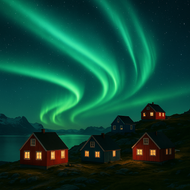
Meditation Practice in Greenland
Posted by Jay Suthers on Jan 20th, 2026
Meditation in Greenland is a study in contrasts. It exists at the intersection of an ancient, animistic past and a modern, wellness-focused present. While the country does not have a historical lineage of Buddhist or Vedic meditation, the practice has found a unique home here, shaped by the extreme Arctic environment, the resurgence of Inuit spirituality, and a growing local mental health movement.
1. The Land as the Primary Teacher
For both locals and visitors, the Greenlandic landscape itself acts as the primary vehicle for meditative states. In a country where 80% of the landmass is covered by an ice cap and silence is a tangible physical presence, "meditation" often happens spontaneously rather than formally.
- The Arctic Silence: Travelers often describe the "deafening silence" of the fjords. Without the noise pollution of the modern world, the mind is naturally drawn inward. Retreat centers like Camp Itivi and Kiattua Camp market this silence as a luxury commodity, offering "digital detoxes" where the focus is simply sitting with the vastness of the Disko Bay or the Nuuk Fjord.
- Nature-Based Mindfulness: Activities like kayaking (qajaq), berry foraging, and hiking are performed with a rhythmic, singular focus that parallels moving meditation. The state of flow achieved while navigating icebergs or traversing the tundra is a central part of the Greenlandic experience of "being present."
2. Ancient Roots: The Angakkuq and Trance
Before the arrival of Christianity, the Inuit practiced a form of spirituality that paralleled deep meditative states. The Angakkuq (shaman) was the mediator between the human world and the spirit world (Sila).
- Trance States: Through drumming (qilaat) and chanting, the Angakkuq would enter trance states to travel to the spirit realms—deep under the sea to appease the Sea Woman (Sedna/Sassuma Arnaa) or into the sky. While this was not "meditation" in the sense of mindfulness, it was a disciplined practice of altered consciousness.
- Modern Revival: Today, there is a cultural reclamation of these practices. Some modern retreats, such as those led by Nomad Greenland, incorporate storytelling, traditional drumming, and "shamanic journeys" into their wellness programs. This blends the Western demand for "spirituality" with authentic indigenous heritage, allowing participants to experience a uniquely Greenlandic form of introspection.
3. The Rise of Arctic Wellness Tourism
In recent years, Greenland has emerged as a frontier for "extreme wellness." International yoga and meditation teachers have begun hosting retreats in remote locations, selling the Arctic as the ultimate backdrop for inner work.
- Luxury & Isolation: High-end retreats (often costing upwards of $4,000) bring small groups to glamping sites in the wilderness. Providers like Reclaim Yourself Retreats and Zephyr Yoga combine Hatha or Yin yoga with "Arctic mindfulness"—meditating on the decks of boats while watching whales or practicing pranayama (breathwork) in the crisp, cold air.
- Cold Exposure: Influenced by the global Wim Hof trend, but rooted in local necessity, cold plunges in the Arctic Ocean are increasingly paired with meditation. The extreme cold forces an immediate, sharp presence of mind, which practitioners use to cultivate mental resilience.
4. Inner Resilience: Mental Health & Local Practice
Away from the tourist retreats, meditation and mindfulness are slowly gaining ground as therapeutic tools for the local population. Greenland faces significant mental health challenges, particularly high rates of suicide among youth.
- Mindfulness for Resilience: Public health initiatives and NGOs (like Foreningen Grønlandske Børn) have begun exploring mindfulness as a tool for emotional regulation and trauma processing.
- Community Healing: There is a move toward culturally adaptive practices—mindfulness that doesn't just ask a person to "watch their breath," but to connect with Inuuneritta (the good life/health). This involves grounding exercises that connect individuals to their community and the land, rather than just an internal, solitary focus.
Conclusion
In Greenland, meditation is rarely about sitting cross-legged in a studio. It is a practice carved out of the elements: the stillness of the ice sheet, the rhythm of the drum, and the resilience required to thrive in the Arctic. Whether for a tourist seeking silence or a local seeking healing, the practice remains deeply tethered to the land itself.
This video showcases a yoga and meditation retreat in Greenland, visually demonstrating how the practice is integrated with the dramatic Arctic landscape and offering a glimpse into the "silence" described in this article.
Shop for Meditation Cushions Here.
I hope this is helpful but please let me know if you have any questions or thoughts.
Sincerely Yours,
Jay
If you have questions or comments regarding this Blog, please feel free to Contact Sage Meditation Customer Service.