

Why We Lean Into The Warm Glow of Nostalgia
Posted by Jay Suthers on Feb 4th, 2026
There is a specific irony in the fact that I spent my morning streaming high-definition audio from an iPad into a 1946 Montgomery Ward tube radio.
Objectively, the radio is "worse" than the smartphone in my pocket. It’s bulky, it only catches a handful of AM stations, and the audio fidelity doesn’t compete with a modern Bose or Sonos. Yet, when I turn that heavy wooden knob and wait for the tubes to warm up, I feel a sense of calm that no modern gadget can replicate.
This feeling has a name: Nostalgia. But why do we crave it, and why does a radio built 15 years before I was born feel like "home"?
What Exactly is Nostalgia?
The word comes from the Greek nostos (homecoming) and algos (pain). Originally, it was considered a medical condition—a literal homesickness.
Today, we understand it more as a "sentimental longing for the past." It isn't just about remembering; it’s about feeling. When we interact with an object like a vintage radio, we aren't just looking at wood and wire; we are touching a physical anchor to a different era.
Why Are We Attracted to "Old" Things?
You might wonder how you can feel nostalgic for a time you didn't actually live through. This is often called Anemoia—nostalgia for a time you’ve never known. We are drawn to these objects for three main reasons:
- Tactile Authenticity: In a world of plastic and touchscreens, "real" materials like solid walnut and heavy glass feel significant. They have a "soul" that mass-produced tech lacks.
- A Slower Pace: Modern tech is designed for speed and "optimization." Vintage tech was designed for presence. You can’t rush a tube radio; it asks you to wait a moment while it warms up.
- The "Golden Age" Filter: We tend to view the past through a lens that filters out the stress of that era, leaving behind a version of life that feels simpler, quieter, and more intentional.
How Nostalgia Brings Us Peace
In a fast-paced, digital-first world, nostalgia acts as an emotional stabilizer. Here is how it brings peace into our daily lives:
- It Provides Continuity: In a world that changes overnight, holding onto a piece of the 1940s reminds us that we are part of a longer story. It connects our present self to the generations that came before.
- It Reduces Stress: Studies have shown that indulging in nostalgia can actually counteract loneliness and anxiety. The "warmth" of the radio’s sound isn't just acoustic—it's psychological.
- It Creates a "Sanctuary of Sound": When I play music through that Montgomery Ward, I’m not just "consuming content." I’m creating an atmosphere. The imperfections in the audio—the slight hum and the mid-range punch—make the music feel more human and less "processed."
"Nostalgia is a file that removes the rough edges from the good old days." — Doug Larson
Finding Balance
I didn't keep the radio original because I wanted to live in 1946; I added Bluetooth because I wanted to bring the best of both worlds together.
By marrying the beauty of the past with the technology of today, we create something entirely new: a way to enjoy our modern lives while staying grounded in the craftsmanship and "less complicated" spirit of the past.
Sometimes, to move forward, it helps to let a little bit of 1946 glow in the corner of the room.
Shop for Meditation Cushions Here.
I hope this is helpful but please let me know if you have any questions or thoughts.
Sincerely Yours,
Jay
If you have questions or comments regarding this Blog, please feel free to Contact Sage Meditation Customer Service.
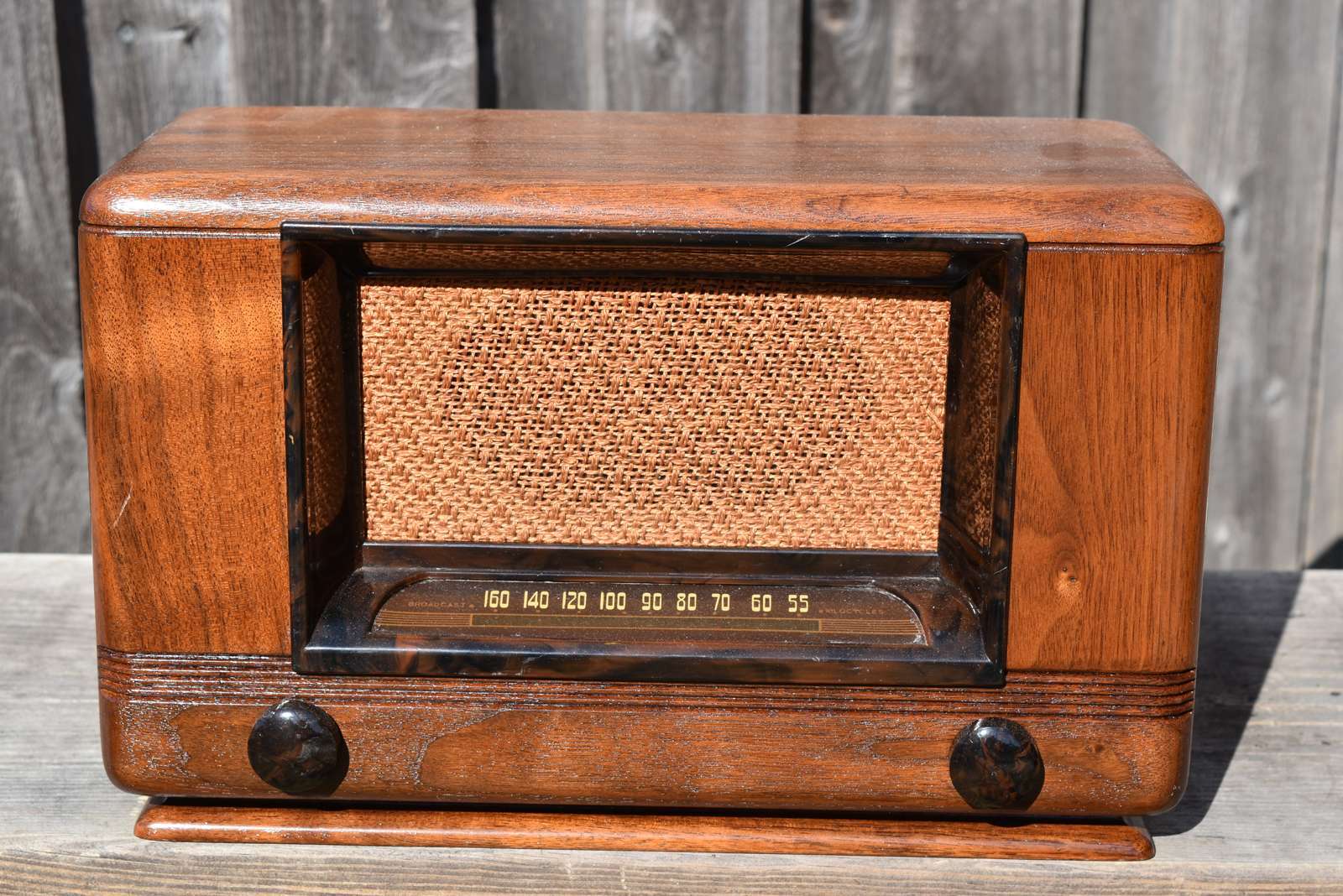
Spotlight: The Montgomery Ward Airline Model 64WG-1804B
Manufactured in 1946, the Airline Model 64WG-1804B is a quintessential piece of post-war Americana. Produced by Wells-Gardner for Montgomery Ward, this model is housed in a stunning "waterfall" style wood cabinet, a design hallmark of the era that transitioned from the Art Deco period into mid-century modernism.
-
The Build: A classic "Superheterodyne" receiver featuring a 6-tube circuit.
-
The Aesthetic: Known for its easy-to-read "slide-rule" dial and the warm, amber glow of its pilot lights.
-
The Sound: While originally designed for AM broadcast, the 1804B’s large wooden cabinet acts as a natural resonance chamber, providing a rich tone that modern plastic speakers simply can’t replicate.
By integrating Bluetooth into this 80-year-old chassis, we aren't just preserving a machine; we’re keeping a piece of industrial art functional for the next generation of listeners.