
Updated January 2, 2026
 Choosing the proper meditation cushions and meditation pillows depends on a few criteria including meditation posture, proper alignment, comfort, and the look and feel of the cushion. Find the best meditation cushion for you.
Why Do I Need a Meditation Cushion?
The human body is neither flat nor predictably curved. Without proper support, your body will succumb to the shape of the surface on which it rests. This generally causes the legs, hips, spine, shoulders, and head to misalign and can result in discomfort. Meditation cushions, meditation pillows, yoga bolsters, knee pillows, and other props can greatly improve your posture and comfort level during meditation. As with any practice, whether sewing clothes, dong home repair, or cooking in the kitchen, meditation requires the proper tools to ensure a successful practice session.
Meditation Posture
 Common meditation postures include the traditional full-lotus, half-lotus (cross-legged), kneeling (seiza), chair sitting, or savasana (lying) postures. You may use more than one posture for meditation such as the half-lotus for your morning meditation and then savasana at the end of a yoga session. The ability to meditate in any of the sitting or kneeling postures is determined largely by the flexibility of your ankles, knees, and hips. In most cases some type of support cushion is needed in order to maintain proper alignment and comfort during meditation.
Proper Alignment
During a sitting meditation in either the full or half lotus posture a firm foundation is crucial. The spine should be erect with the lower back curved in, the upper back curved out slightly, the neck curved in slightly, and the head level (the "S" curve). This alignment naturally supports your body, allows for the greatest comfort, and reduces stress on the spinal components. In the lotus posture, the traditional Zafu and Zabuton Meditation Cushions work well.
SHOP with us Today!
All the items discussed in this article are available for purchase on this web site.
The Zafu Meditation Cushion, the traditional round pleated cushion, raises the hips and upper body so that the legs can rest comfortably. One normally sits on the edge of the zafu so that the thighs slope down slightly. This posture rolls the hips forward creating the natural curve in the spinal column. When the spinal column is in its natural alignment, the back, shoulders, neck and head assume a comfortable upright posture that is easy to maintain during meditation. When used alone, the zafu is well suited for persons of average height and who have normal to above average flexibility.
Taller individuals and those with more limited flexibility tend to benefit from a higher lift. Sitting directly on top of the zafu can increase lift, but may result in an unstable feel with difficulty maintaining balance and proper alignment. A rectangular meditation cushion can be used with the zafu to increase lift and allow for positioning of the cushions to produce proper alignment.
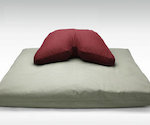 A unique variation to the zafu is the Cosmic Cushion. This cushion has a fortune cookie shape and built-in slope that produces proper alignment with greater comfort. The extended sides of the cushion support the thighs, and the heel cutout allows the heels and ankles to be positioned closely to the body. The Cosmic Cushion works well for most everyone, but is an ideal cushion for taller persons and those who are less flexible. A lower loft version of the Cosmic Cushion may be best suited for persons who are shorter than 5' 6" or have average to above average flexibility.
You can test your flexibility by sitting in a cross-legged posture on the floor with no cushions at all. If your knees go down near or all the way to the floor, you have good flexibility. If your knees are more than a few inches from the floor or want to stay up in the air, you have limited flexibility. With limited flexibility, you want more lift, i.e. a higher cushion.
For those who prefer only a slight lift, but still want a cutout to allow close positioning of the heels, the Heavenly Buckwheat Bean may be the best solution. Greater flexibility may be needed in order to feel comfortable on the Heavenly Buckwheat Bean, because of its lower lift.
The Rectangular Meditation Cushion is a simple solution that can provide lift for proper alignment. Since this cushion has straight edges, it will not interfere with positioning of the heels. The lift is not as high as the standard zafu and is preferred by those with greater flexibility or who are of average height or lower. The rectangular meditation cushion is oftentimes preferred by more experienced meditators.
 The Zabuton Meditation Cushion provides cushioning for the knees and ankles during sitting meditation. This cushion is placed under the zafu or other sitting cushion. Proper alignment of the body in the sitting posture can create some additional pressure on the knees and ankles, and the zabuton helps to cushion these pressure areas.
When discomfort is experienced in the hip joint, knees or ankles, additional support can be provided by the Knee Pillow or Kapok Support Cushion. Placing the knee pillow under the knee will raise the knee up reducing the torque on the knee joint.
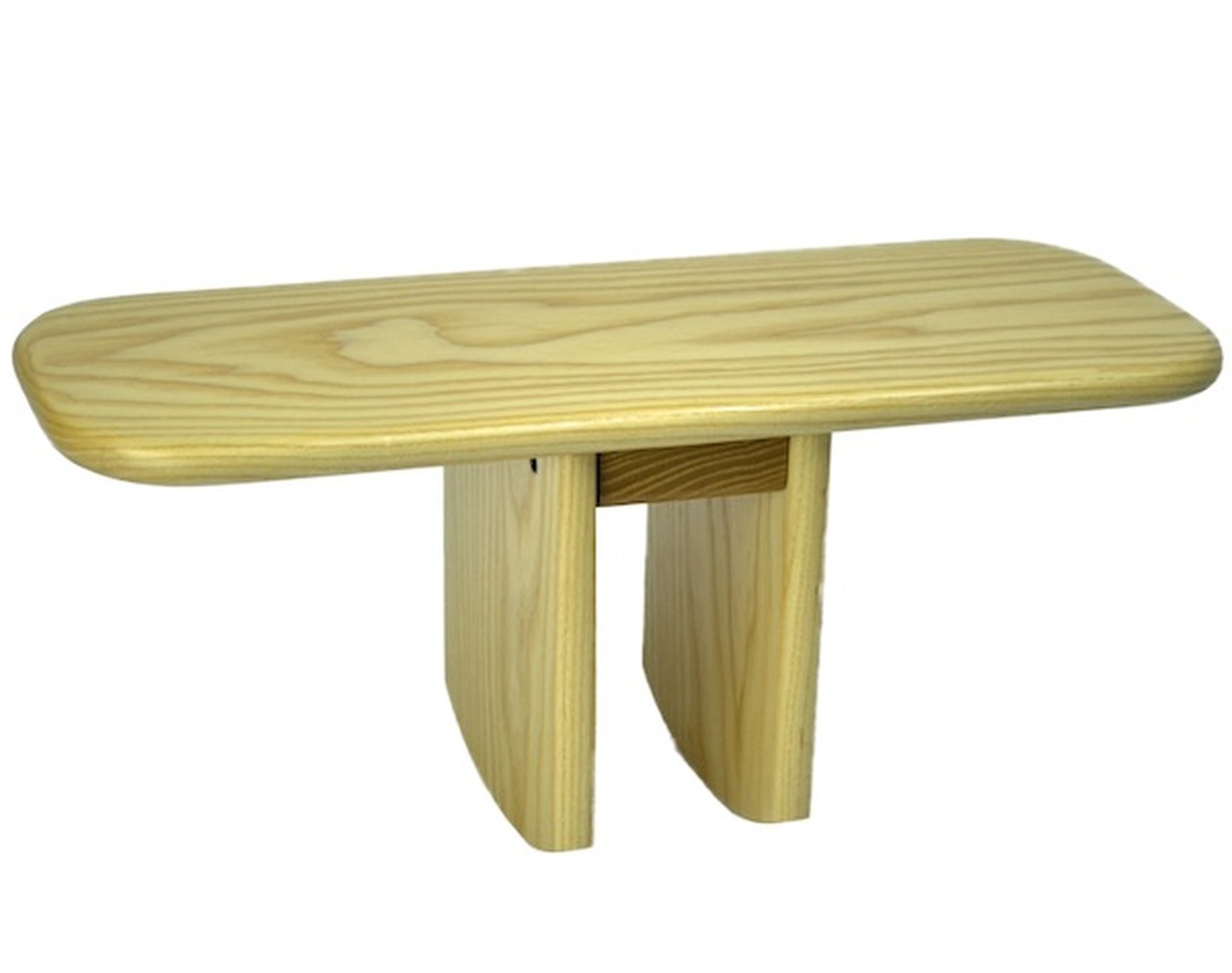
The kneeling or Seiza meditation posture can be supported by a Zafu, Meditation Bench, Rectangular Meditation Cushion, or Yoga Bolster. Straddling one of these cushions will support the upper body and reduce torque on the knee joint. Using a combination of these cushions can increase lift for taller persons or those with more limited flexibility. A zabuton or kapok support cushion can be used to cushion the knees and ankles from hard floor surfaces.
In the sitting meditation posture, a BackJack Chair can be helpful to support the back. Whether a Backjack or regular chair is used, a kapok support cushion can be used to cushion the lower back and create the normal "S" curve of the spine.
 In the lying posture a Cotton Yoga Mat or Shiatsu Massage Mat can provide the basic foundation for comfort. A Yoga Bolster, Knee Pillow, or Kapok Support Cushion can be placed under the knees, back, neck or other areas of the body to raise and support those areas of the body.
Comfort
No matter which posture is assumed during meditation, a firm foundation, proper alignment to support the body and breath, and comfort are important. Meditation and support cushions are instrumental in achieving comfort so that one can focus on the mind and not be distracted by physical discomfort. When we first begin a meditation practice it is useful to focus on the body for a short time to take notice of any areas of the body that need additional support or adjustment.
SHOP with us Today! All the items discussed in this article are available for purchase on this web site.
Cushions
 There are many cushions available for meditation. They come in a variety of shapes, sizes, and colors and are made with many different materials. It is important to take the time to think about each of the designs and how they can best suit your personal needs. Consider the height of the cushions, whether the fabric is durable yet soft, and how the fill will support your body.
The color of the cushion may not be too important, though most people look for a color that will fit with the color scheme of their meditation space. The following article on Feng Shui and color may be helpful in choosing the colors for your meditation space.
Feng Shui and Color: Creating an environment for well-being by Joanna Trevelyan
In general, the basic colors affect your personal energy in the following ways:
Red - linked with fire energy (elevates energy)
Violet - restores balance (includes purple & plum)
Yellow - lifts the mood and clears the mind
Blue - calming color that helps relax
Black - induces deep inward focus and discipline
Orange - induces healing both physically and mentally
Green - creates balance and calmness; encourages slow, deep breathing
Other colors contain aspects of one or more other colors. Brown, for example, offers the qualities of Green and Orange. In general, the stronger the color the more powerful the effect.
Kapok versus Buckwheat Hull
Kapok is a downy cotton-like material that comes from the Kapok Trees of Asia and southern regions of the US. When blown into a cushion the kapok becomes dense and firm. It is a useful product for meditation cushions because it does not compress like cotton, polyester batting, and foam products. It is also lightweight. It has enough give to conform to the shape of the body without collapsing and becoming unsupportive. Kapok has been used for centuries in meditation cushions.
Buckwheat Hulls are the outer chaff of the buckwheat grain. The hulls are small, dark, and saucer-shaped. When poured into a cushion they take on the effect of a pile of sand, but with a lot less weigh. A buckwheat hull cushion does weigh more than a Kapok cushion, however. The result of the buckwheat hulls is that they conform quite easily to the shape of the body and create a very grounded feeling. buckwheat hull cushions feel more stable than the kapok cushions and are preferred by many.
For more information on these types of fill, read our blog article on choosing the best fill for your meditation cushion.
Conclusion
Meditation Cushions are the tools of meditation practice. They help support the body in various meditation postures and create proper alignment and comfort. Whether you choose the traditional zafu and zabuton meditation cushions or the more contemporary Cosmic Cushion or Heavenly Buckwheat Bean, your meditation experience can be improved by the use of these aids.
SHOP with us Today! At Sage Meditation we've been making cushions for more than 30 years and have put a great deal of thought into the design and construction of our meditation cushions. It is always helpful to turn to those who are practicing meditation regularly for feedback on which cushions are working best for them. As you explore meditation cushions, please feel free to contact Sage Meditation Customer Service with any questions.
Learn more about Meditation Technique, Cushion Reviews, other Meditation Products, and Solving Problems such as Leg Numbness by reading our Sage Meditation Blog.
We hope this information has been helpful to you and that we can be of service to you soon.
Additional Articles of Interest
Kapok vs. Buckwheat Hulls
Leg Numbness During Meditation
Cosmic Cushion Meditation Cushion Size Review
How to Properly Use a Zafu Meditation Cushion
Managing Stress Through Meditation
Our Contact Information
Email - ✔ Recommended
Please use the Contact Form on our Contact Page, or email us at:
info[at]sagemeditation.com
We respond to emails quickly (a little longer on National Holidays and Weekends).
Telephone
608-204-9833
Mailing Address - Not a Retail Store (please shop online)
Sage Meditation
1213 N Sherman Avenue
Madison, WI 53704