
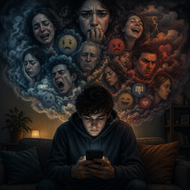
Detaching From Social Media: Reclaiming Your Mind in a World Built to Capture It
Posted by Jay Suthers on Apr 14th, 2026
Social media was supposed to connect us. And in some ways, it still does — birthdays, family photos, travel updates, the occasional heartfelt post that reminds us why we joined in the first place.
But somewhere along the way, the experience shifted. What once felt like a digital town square now feels more like a psychological minefield.
For many people, social media has become a source of:
- anxiety and depression
- comparison
- FOMO
- emotional whiplash
- political tension
- persistent negativity
And the truth is, none of this is accidental. Social media platforms are engineered to keep us scrolling, reacting, and returning — even when the experience leaves us feeling drained.
At some point, we have to ask: Is this helping me live a better life, or is it quietly eroding my peace?
The Psychological Toll of the Endless Scroll
Social media affects people of all ages, and not in subtle ways. The highs and lows of what we see — the joyful announcements, the tragic news, the political rants, the humblebrags, the outrage cycles — create a rollercoaster that our nervous systems were never designed to ride daily.
A few patterns show up again and again:
1. Emotional Whiplash
You scroll past a baby announcement, then a political argument, then a tragedy, then a meme, then someone’s vacation photos. Your brain can’t process that many emotional shifts without cost.
2. Comparison and FOMO
Even when you limit your feed to friends, the “highlight reel effect” kicks in. You see:
- perfect vacations
- perfect families
- perfect homes
- perfect achievements
And even if you know it’s curated, your body still reacts with a subtle sense of “I’m behind.”
3. Negativity Bias
Some friends use social media as a place to vent, rage, or catastrophize. Even if you scroll past quickly, your mind absorbs the tone.
4. Algorithmic Manipulation
Platforms are designed to keep you hooked — not happy. They show you what will keep you scrolling, not what will keep you grounded.
And that’s where the unrest begins.
The Case for Detaching — or Leaving Altogether
There comes a point when you realize the cost is too high. When you notice:
- your mood drops after scrolling
- you feel tense or agitated
- you’re thinking about posts long after you close the app
- you’re comparing your life to others
- you’re absorbing negativity that isn’t yours
- you’re losing time you never meant to give away
That’s when detaching becomes less of a choice and more of an act of self‑preservation.
There’s a bit of irony in the fact that the initials “SM” overlap with sado‑masochism. Because sometimes, scrolling really does feel like a strange mix of pleasure and pain.
How to Step Back Without Losing Connection
You don’t have to disappear from your friends’ lives to reclaim your peace. You just need to change the way you engage.
Here are a few approaches:
1. Curate ruthlessly
Clicking the “Friends” filter is a good way to start. But you can go further:
- unfollow political ranters
- mute chronic complainers
- hide accounts that trigger comparison
- remove pages that stir negativity
- you might even unfollow pages that align with your interests if they, too, become more political or activist-like
Your mental health is more important than someone’s digital feelings.
2. Set intentional limits
Instead of scrolling mindlessly, decide:
- when you’ll check
- how long you’ll stay
- what you’re there for
Purposeful use feels completely different from habitual use.
3. Replace scrolling with connection
If you want to stay close to friends, try:
- texting them directly
- calling occasionally
- meeting for coffee
- sending a photo or voice message
Real connection doesn’t require an algorithm.
4. Take breaks — real ones
A week off. A month off. A season off.
You’ll be surprised how quickly your mind recalibrates.
5. Consider leaving altogether
For some people, the healthiest choice is to walk away. Not out of anger — but out of clarity.
If social media consistently makes your life worse, you’re allowed to choose peace.
The Freedom on the Other Side
When you detach from social media, something unexpected happens:
- your mind quiets
- your mood stabilizes
- your attention returns
- your anxiety decreases
- your sense of self strengthens
- your relationships become more intentional
- you might actually feel bored and learn to attend to other things like reading, doing puzzles, or taking a walk in the woods
You stop living in reaction to other people’s posts. You stop absorbing the emotional chaos of the digital world. You stop comparing your life to curated snapshots.
You return to yourself.
And that’s the real point — not abandoning technology, but reclaiming your inner landscape from something that was never designed to protect it.
Shop for Meditation Cushions Here.
I hope this is helpful but please let me know if you have any questions or thoughts.
Sincerely Yours,
Jay
If you have questions or comments regarding this Blog, please feel free to Contact Sage Meditation Customer Service.